


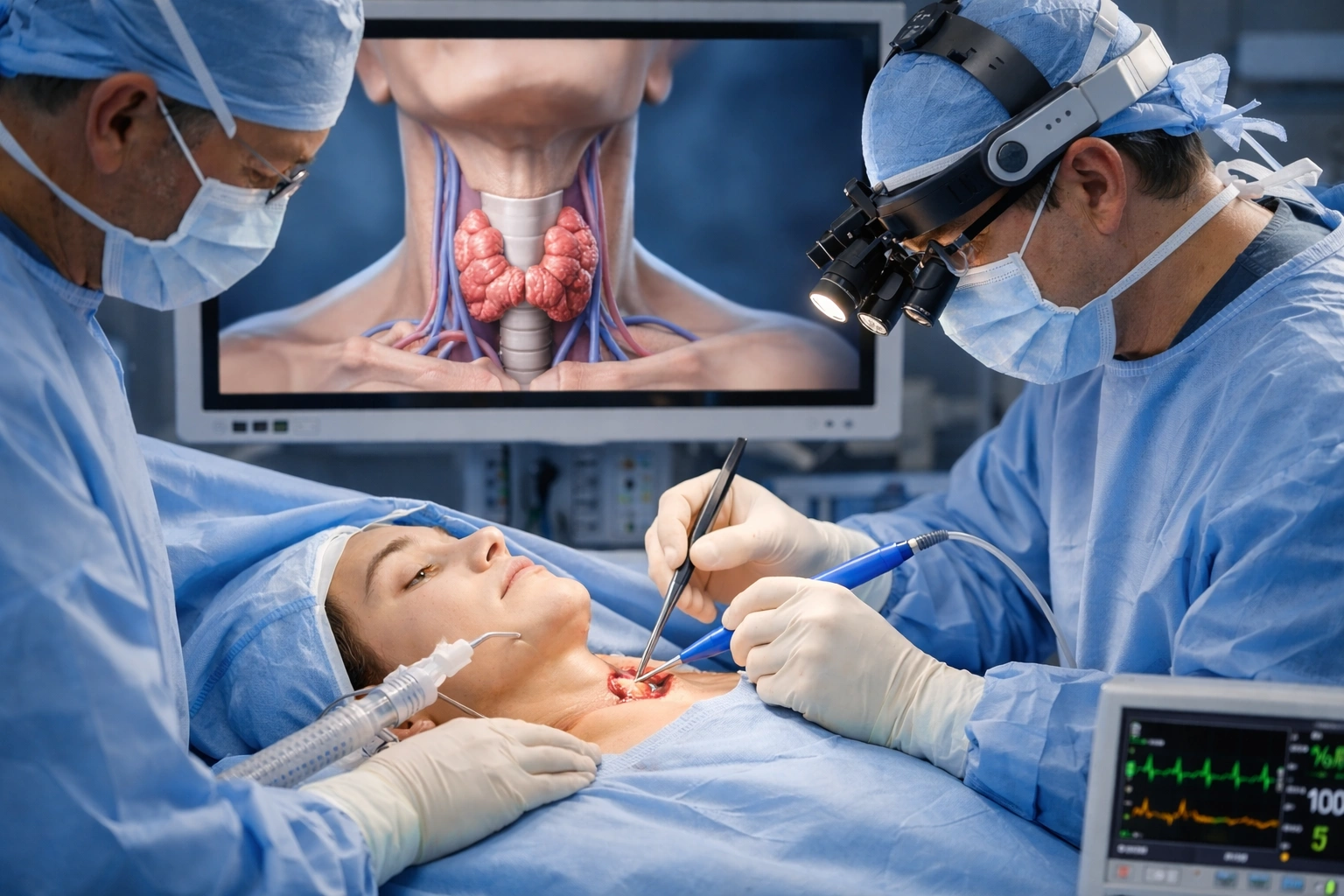
Being told that you need surgery for thyroid cancer often brings a mix of worry and confusion. Most patients hear the diagnosis and immediately assume that the entire thyroid has to be removed. Others are unsure why one person needs a smaller procedure while another needs a more extensive one. The real picture is treatment has to be individualized. Modern Thyroid Cancer Treatment focuses on matching the surgery to the biology of the tumour, not the other way around.
Why Thyroid Cancer Allows for Individualised Surgical Planning
Thyroid cancer behaves differently from many other cancers. Most types grow slowly and stay limited to the gland for long periods. This gives doctors time to study the tumour, understand its pattern and choose an operation that fits the patient’s exact condition. An experienced endocrinologist always starts with a careful review of the ultrasound, biopsy report and hormone profile. These details reveal how far the cancer has progressed and whether the surgery should be limited or more complete.
When a Lobectomy Is Sufficient
For early cancers that sit inside one lobe and show a predictable pattern, removing only that portion can be enough. This procedure is called a lobectomy. Patients appreciate this option because part of the thyroid remains intact and may continue to produce hormone on its own. Recovery is usually smooth and many individuals do not need long term hormone tablets. It is a reassuring choice when the disease allows it.
Situations That Require Complete Thyroid Removal
Sometimes the cancer involves both lobes, or it carries features that suggest the need for a more thorough approach. In such cases, the surgeon removes the entire thyroid. This allows for very accurate follow up because blood tests become much easier to interpret after the gland is gone. Doctors can track cancer markers closely, and radioactive iodine, when needed, works more effectively. Total removal is not chosen lightly. It is recommended only when it offers the safest long term outcome.
Managing Lymph Node Involvement Safely
A small number of patients have cancer that has reached nearby lymph nodes. This does not necessarily mean the cancer is aggressive, but it does mean surgery has to be more extensive. Clearing those nodes during the same operation reduces the chance of recurrence and gives a more complete treatment. This part of the surgery requires steady hands and deep familiarity with the anatomy. The nerves that control the voice and the parathyroid glands that regulate calcium lie close to the thyroid. Protecting them is one of the most important goals of the operation.
How the Patient’s Overall Health Influences Surgical Choice
Apart from the tumour itself, the patient’s wider health also influences the decision. Age, medical history and the presence of additional thyroid nodules guide the final choice. A younger person with a small tumour may benefit from a limited surgery, while an older individual with multiple nodules may be advised a more decisive procedure. Even factors like neck structure and ease of surgical access can influence the plan.
What Recovery and Hormone Management Look Like
Recovery after thyroid cancer surgery is not as difficult as most patients fear. The incision heals well, and most people return to their regular routine within a week. The main focus after surgery is hormone balance. If the entire thyroid has been removed, hormone tablets start soon and are adjusted gradually. For those who undergo a lobectomy, the remaining thyroid often takes over, though the endocrinologist checks hormone levels regularly to ensure the body is adapting well.
Addressing the Emotional Side of Thyroid Cancer Surgery
The emotional part of this journey is often overlooked. When a patient hears the word “cancer,” it becomes difficult to absorb anything else. Surgery feels like a cliff edge. But when someone sits down with their doctor and understands why a certain operation is chosen, the fear settles. Decision-making becomes clearer when the plan is explained step by step.
The Importance of a Thoughtful, Step-by-Step Evaluation
This is where a detailed evaluation matters. Dr. Thalavai Sundarram K S approaches thyroid cancer by first understanding the nature of the tumour rather than rushing toward the operating room. His assessment is methodical. He explains why one type of Thyroid Cancer Treatment suits a patient better than another. He discusses what to expect after surgery, how hormone levels will be monitored and what follow up looks like over the coming years. Patients value this clarity because it replaces anxiety with direction.
Choosing the Right Surgery for the Best Long-Term Outcome
The important message is that thyroid cancer, when treated correctly, has an excellent outcome. Surgery plays a central role, but it must be the right surgery. A procedure that is too small can leave behind disease while an unnecessarily large one can affect long term hormone balance. The aim is balance: remove what is needed, preserve what is safe and give the patient the best chance at long term health.
Making Confident, Informed Decisions About Thyroid Cancer Surgery
If you or someone you know has been diagnosed with thyroid cancer and is unsure which surgical option fits their condition, a detailed consultation can make a world of difference. Understanding the tumour’s behaviour helps you make choices with confidence rather than fear.
Patient-Centred Thyroid Cancer Care at Dr Thalavai Sundarram’s Clinic
At Dr Thalavai Sundarram’s clinic, thyroid cancer care is built on experience, clarity and patient comfort. Every person receives a plan shaped around their needs so that the decision about surgery becomes informed, measured and reassuring.

Medically Reviewed by
Dr. Thalavai Sundarram
Endocrinologist
M.S., M.Ch (Endocrine Surgery) FARIS
BOOK APPOINTMENT