


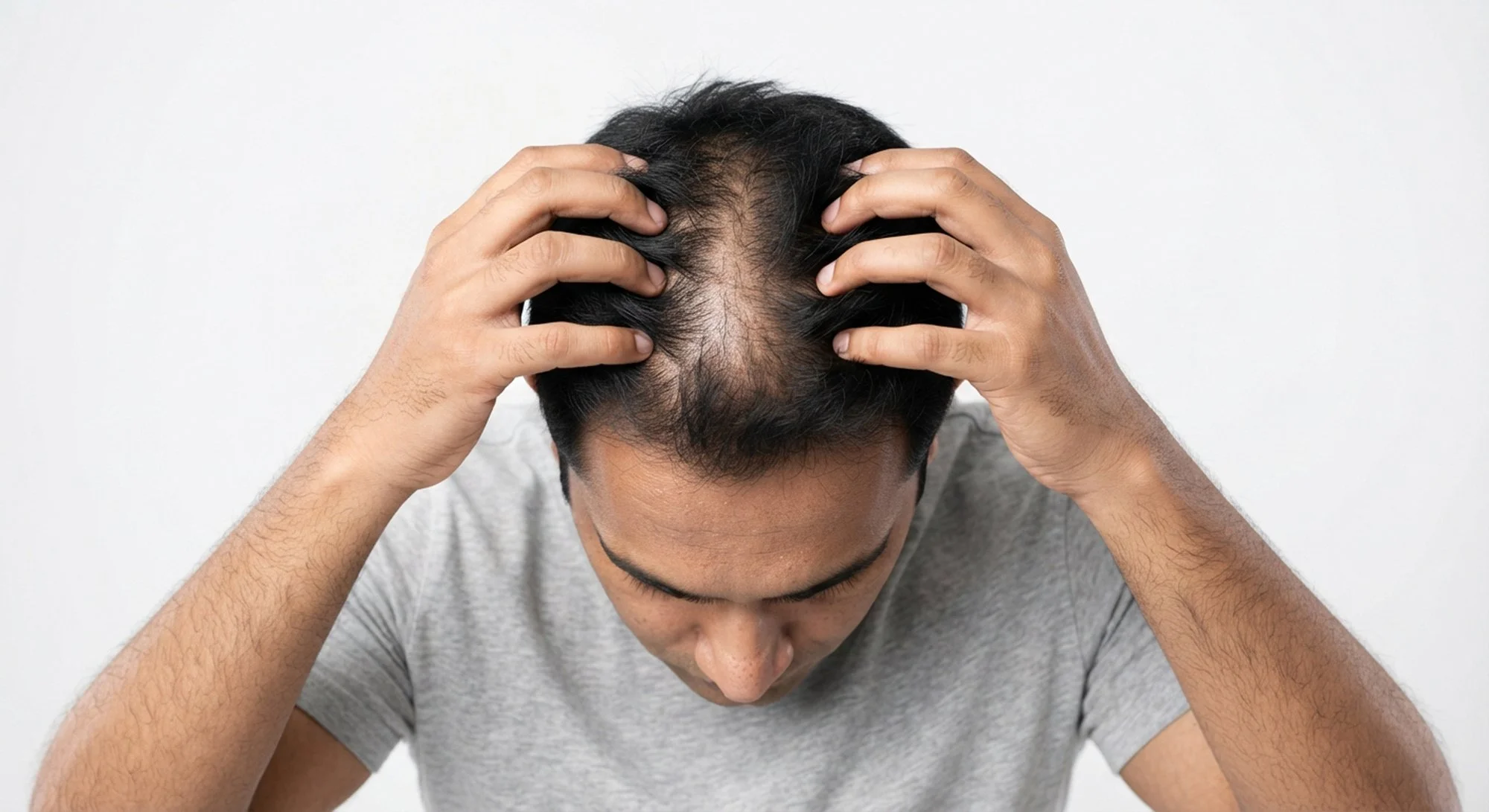
Hair fall in men rarely begins dramatically.
For most, it starts quietly.
A few extra strands on the pillow. More hair near the bathroom drain. A slightly wider forehead in photographs that somehow was not there a year ago. At first, it feels easy to ignore. Then one day, someone casually says, “Machan, your hairline is changing.” Suddenly, the mirror starts getting more attention.
The question almost every man eventually asks is this:
Is hair fall genetic — or hormonal?
The short answer?
Usually, it is both.
But the relationship between genetics and hormones is more connected than most people realize.
Hair loss in men, especially the common type known as male pattern baldness, is not simply about “bad genes” or “hormone imbalance” alone. It is a biological process where inherited sensitivity and hormones work together.
Understanding that difference matters because not every kind of hair fall behaves the same way.
Why Men Lose Hair Differently
Hair naturally grows in cycles.
Each strand goes through phases of growth, rest, shedding, and regrowth. Losing some hair daily is completely normal. In fact, shedding anywhere between 50 to 100 strands a day may not necessarily signal a problem.
What becomes concerning is when hair stops growing back with the same thickness.
This is often where male pattern hair loss begins.
Instead of sudden shedding, men usually notice:
- Receding hairline
- Thinning near the temples
- Reduced hair density at the crown
- Gradual widening of visible scalp
The change tends to be slow, which is partly why many men do not notice it until significant thinning has already happened.
The Genetics Part: Why Family History Matters
If hair loss runs in the family, chances are higher that it may eventually affect you too.
But genetics is often misunderstood.
Many people assume baldness comes only from the mother’s side of the family. The truth is more complicated. Hair loss patterns can be inherited from either side.
What genetics really determines is how sensitive your hair follicles are to hormones.
At birth, everyone inherits a certain level of follicle sensitivity. Some men may retain thick hair into old age despite hormone changes. Others may start thinning surprisingly early — even in their twenties.
This explains why two men with similar lifestyles may experience completely different hair patterns.
One keeps dense hair effortlessly.
The other notices progressive thinning despite taking care of his health.
The difference often lies in inherited follicle sensitivity.
The Hormone Connection: Why DHT Gets Blamed
Here is where hormones enter the picture.
The hormone most commonly associated with male hair loss is Dihydrotestosterone (DHT).
DHT is not an “abnormal” hormone. It is naturally produced in men through the conversion of testosterone by an enzyme called 5-alpha reductase.
The surprising part?
Hair loss is not usually caused by too much testosterone.
Instead, it is often caused by how sensitive the hair follicles are to DHT.
In men who are genetically predisposed, DHT gradually shrinks susceptible hair follicles over time.
This process is called miniaturization.
Hair begins growing thinner. Growth cycles shorten. Strands become weaker and finer. Eventually, some follicles stop producing visible hair altogether.
This is why male pattern baldness tends to happen gradually rather than overnight.
At first, hair simply looks thinner.
Later, scalp visibility becomes more obvious.
So Is It Genetics or Hormones?
Technically, neither works alone.
Hormones trigger the process.
Genetics decides how strongly the follicles react.
Think of it this way:
DHT may be the key turning the lock, but genetics determines whether the lock exists in the first place.
Without inherited sensitivity, DHT may have very little effect on scalp hair.
With genetic predisposition, even normal hormone levels may gradually contribute to hair thinning.
That distinction matters because many men assume hair loss means they have “hormone problems,” when in reality hormone levels are often completely normal.
Not All Male Hair Fall Is Genetic
This part gets overlooked.
Not every man experiencing hair fall has male pattern baldness.
At times, shedding may happen because of temporary triggers.
Stress, illness, poor sleep, crash dieting, nutritional deficiencies, thyroid disturbances, anemia, or sudden weight loss can all push hair into a shedding phase known as telogen effluvium.
Unlike pattern baldness, this type of hair loss tends to be more diffuse.
Instead of a receding hairline or crown thinning, men may notice overall shedding across the scalp.
The encouraging part is that temporary hair fall often improves once the underlying cause is addressed.
That is why identifying the pattern matters.
Not every case of thinning should be treated the same way.
Can Lifestyle Make Hair Fall Worse?
Lifestyle may not directly “cause” male pattern baldness, but it can certainly influence how noticeable it becomes.
Poor sleep, chronic stress, smoking, nutritional deficiencies, rapid dieting, and inconsistent scalp care may sometimes accelerate shedding or weaken hair quality.
Stress, especially, plays an interesting role.
It may not create genetic baldness, but prolonged stress can disrupt normal hair cycles and worsen existing thinning.
This is often why men notice more shedding during emotionally difficult periods or after major physical illness.
Hair health tends to reflect overall health more than many people realize.
When Should Men Actually Seek Help?
Many men wait too long.
Partly because hair loss feels cosmetic. Partly because they hope it will “settle on its own.”
But timing matters.
Hair loss treatment generally works best while follicles are still active.
If thinning becomes noticeable, if the hairline changes rapidly, or if shedding feels excessive, getting evaluated earlier usually creates more options.
The biggest mistake is often waiting until the scalp has remained bare for years.
At that stage, reversal becomes harder.
Hair Fall Is Rarely Just One Thing
The question “genetics or hormones?” sounds simple.
The reality is more layered.
For many men, hair fall develops through a combination of inherited follicle sensitivity and normal hormonal activity. Genetics creates the tendency. Hormones influence the process. Lifestyle and health factors sometimes shape how quickly it becomes noticeable.
As Dr. Thalavai Sundarram often explains, understanding why hair fall is happening matters far more than assuming all hair loss behaves the same way. Because once the cause becomes clearer, decisions about treatment also become far more realistic.

Medically Reviewed by
Dr. Thalavai Sundarram
Endocrinologist
M.S., M.Ch (Endocrine Surgery) FARIS
BOOK APPOINTMENT